
For the last 18 months AccuPixel director Simon has been restoring a Land Rover. This has been a labour of love with a dual approach of making good anything to reuse, and to source replacements.
We love to capture the world around us. But the real interest comes after capture where we look at what the data can tell us.
One major component needing replacement was the chassis. It’s fair to say Land Rovers do have a reputation for corroding away and Simon’s example is no exception. Plenty of holes had developed in the rails, and someone had replaced the rear crossmember at some point in the past.
Restoring a Land Rover’s Chassis
If this were the last Land Rover chassis left on the planet, we would drag out the welder and repair the chassis. It would have been a lot of work and the issue of rust never really solved. Thankfully brand new galvanised chassis are available off the shelf, making restoring a Land Rover more feasible.
The new chassis looked like a very close match. But how close? Were there any areas that were significantly different and likely to cause assembly problems?
Photogrammetry is a tool that can help answer this question.
Using a pair of stereo cameras as taught on our photogrammetry courses both chassis were scanned and aligned in 3DF Zephyr . We generated a dense cloud for each example and checked the scaling. We then trimmed unwanted background points before exporting each cloud in a neutral format.
Exploring the Data
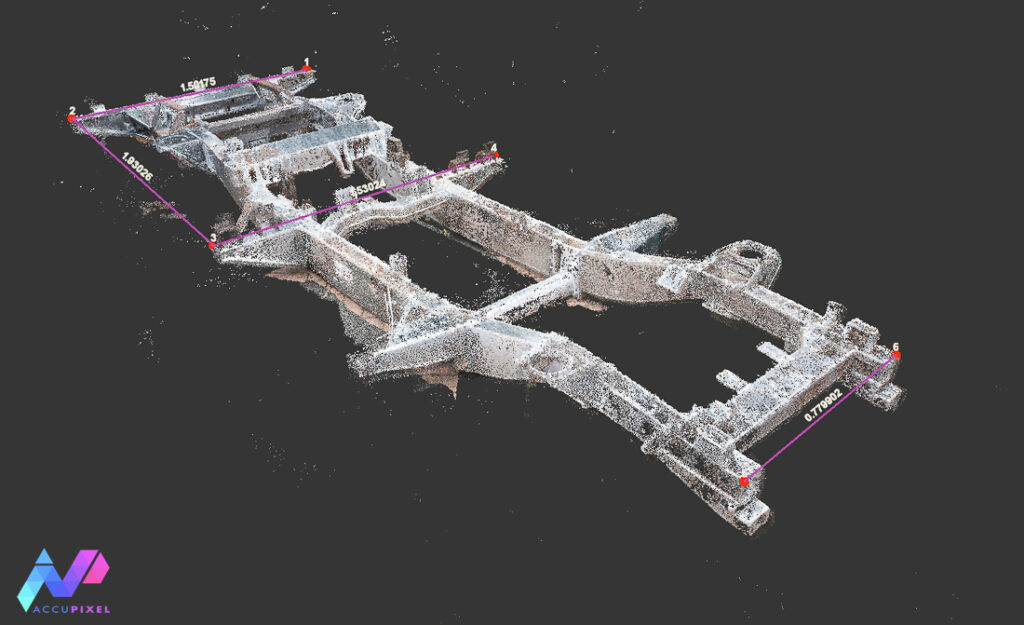
When restoring a Land Rover, photogrammetry data helps us identify dimensional differences. Shooting the images on an overcast day helped limit reflections from the shiny galvanised coating.
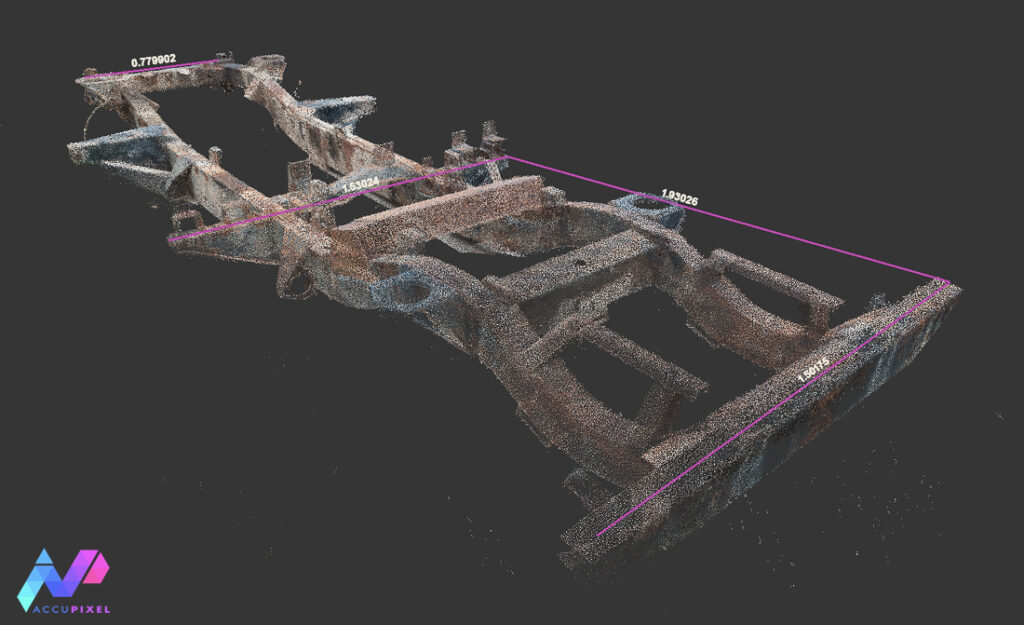
3DF have a really neat tool called Scarlett for aligning point clouds. We imported both point clouds, aligned them visually, and then ran incremental point alignment.
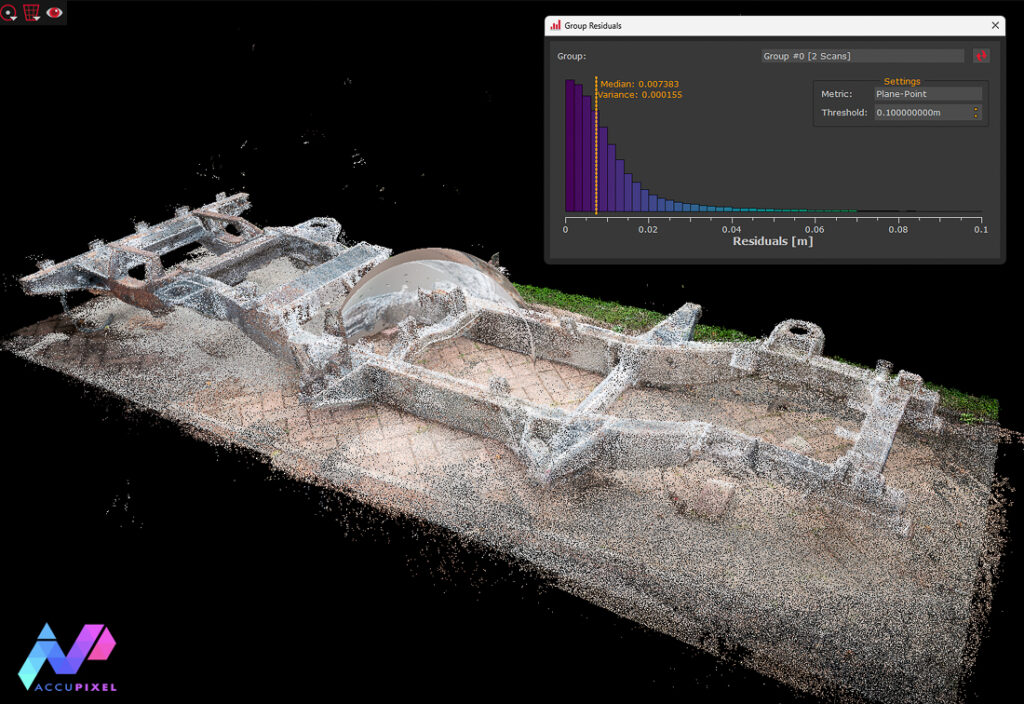
Both clouds were then brought into Cloud Compare. When restoring a Land Rover, the previous alignment eliminated the need for manual adjustment, allowing us to quickly run a distance-to-distance analysis.
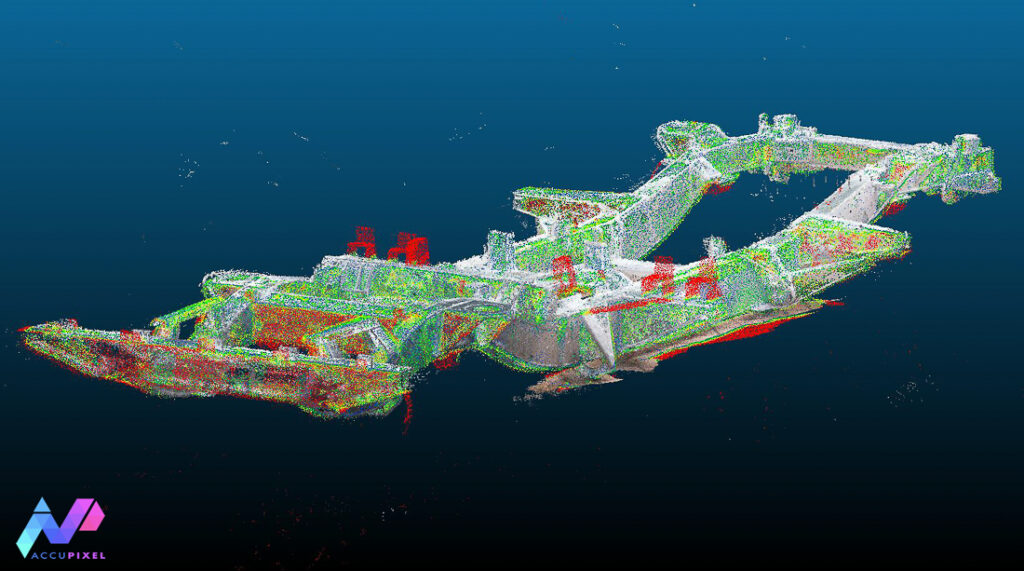
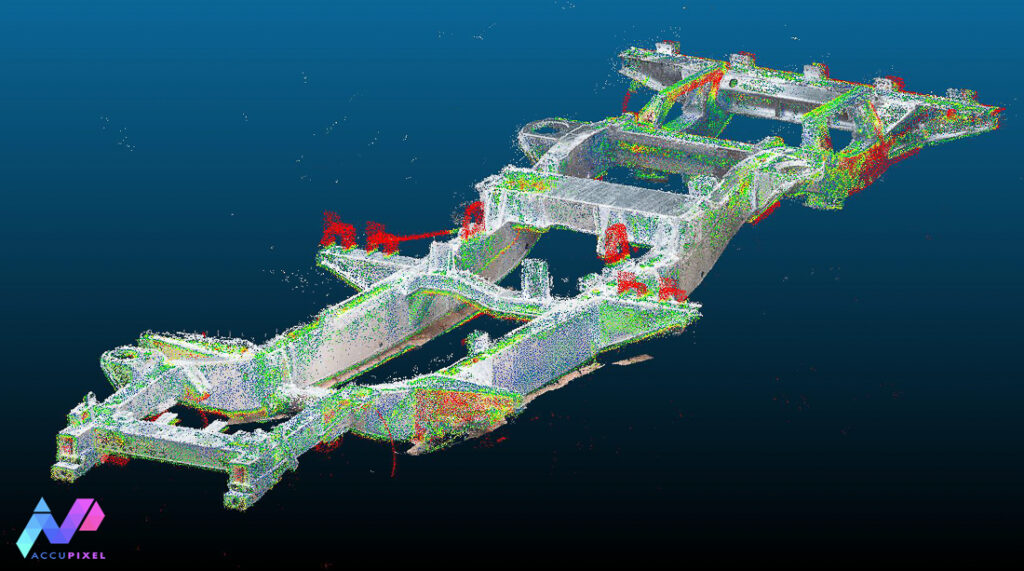
When restoring a Land Rover, the results confirmed that the new chassis closely matched the original dimensions, with deviations limited to body brackets absent from the new chassis and the rear crossmember, which a previous repair had badly replaced.
The new chassis is now in the workshop with gearbox, transfer box and steering box fitted confident there will be no surprises during the rest of assembly.
This is the kind of insight photogrammetry data can provide, on everything from a vehicle chassis, a building, bridge, dam or an entire region. Stay tuned for future blogs detailing Simon’s passion project of restoring a Land Rover.